Utensils
Frying pan: choose the useful base and cooking surface
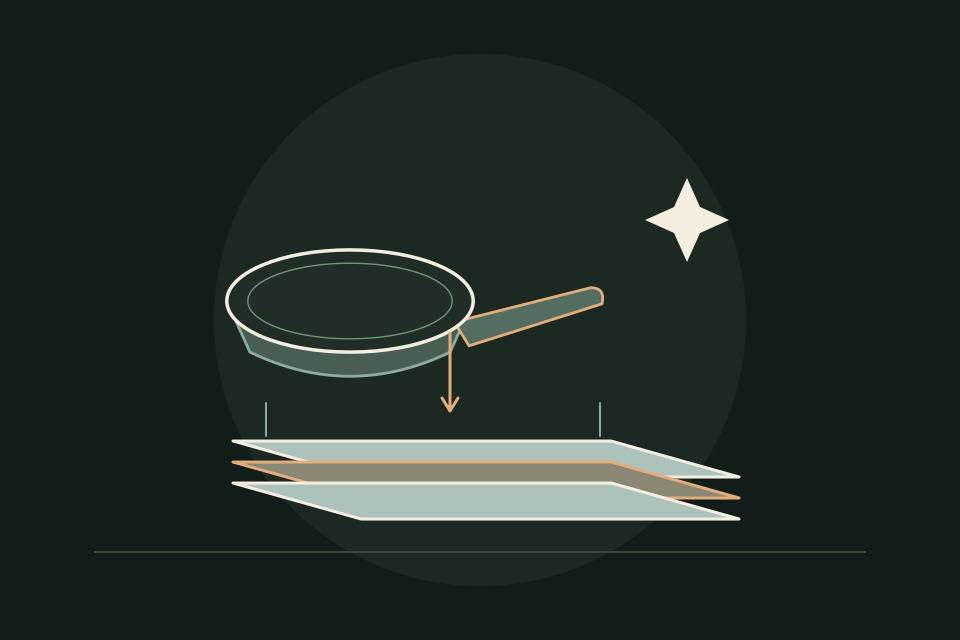
When choosing a frying pan, check the usable base, side height and food-contact surface, then follow the model’s instructions for cooking and care.
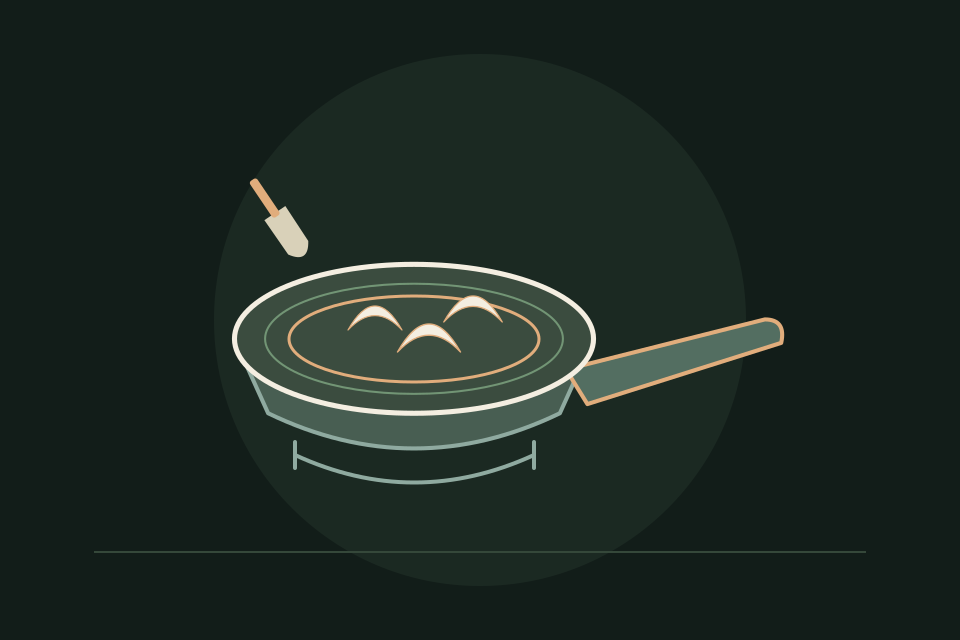
A frying pan offers a wide surface that a spatula can reach easily. But side height matters when mixing pasta into sauce: a sauté pan or wide saucepan may suit the task better. Before checking the diameter, think about what must fit inside and the room you need to stir.
Allow for the food and room to stir
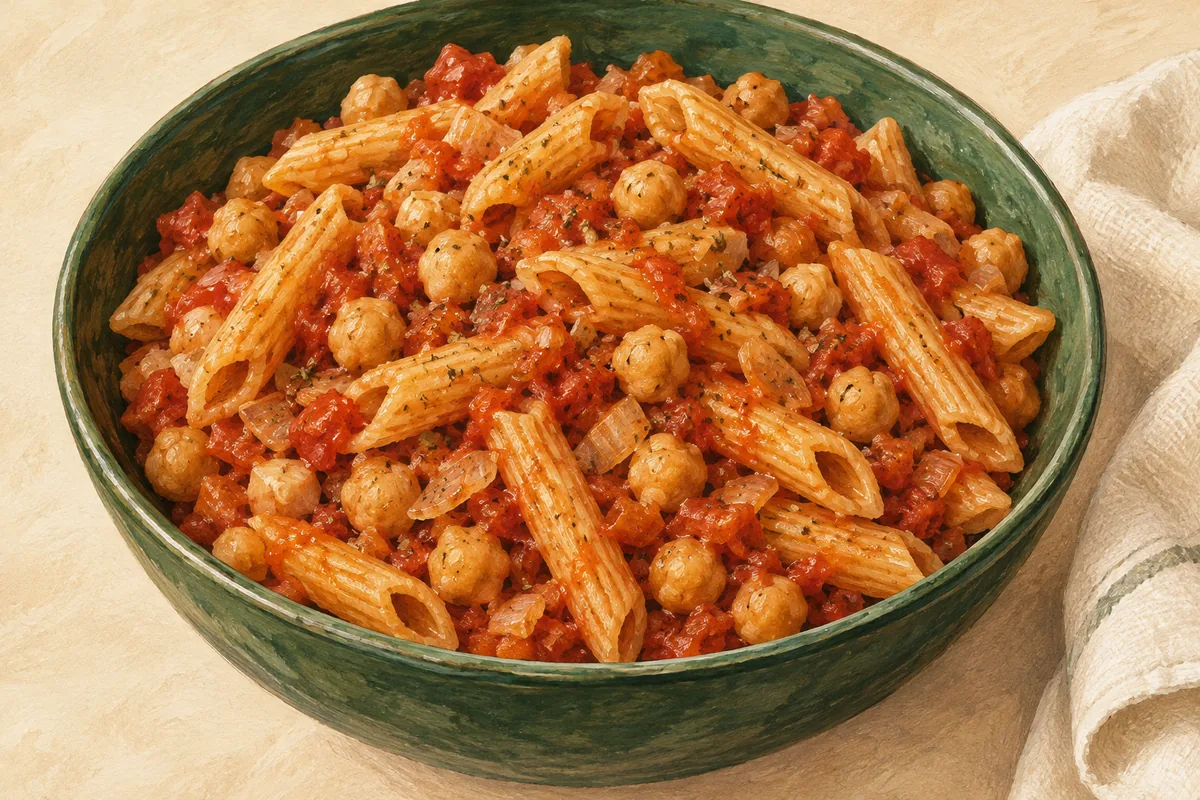
Examine the flat base available, then the useful height for mixing. The diameter at the rim does not describe all that space. For tomato and chickpea pasta, sauce, chickpeas and cooked pasta must come together without overflowing.
Before filling, check stability on the hob, weight and grip. Induction or oven compatibility applies to the complete pan, including handles and lid. Its shape alone cannot tell you this.
Identify the inner surface
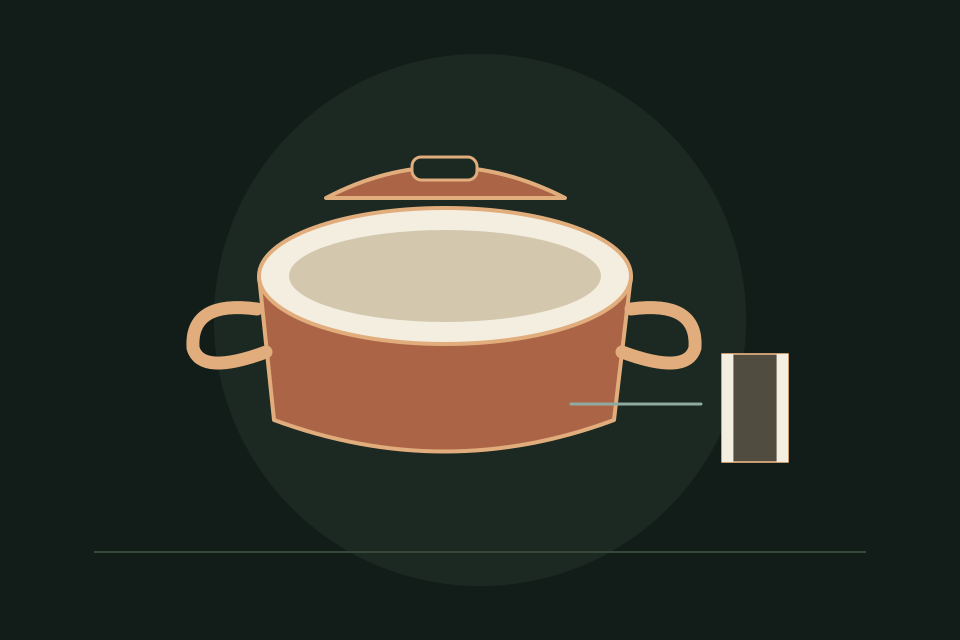
Stainless steel, enamelled cast iron and non-stick coatings may require different use. The metal body alone does not describe the surface touching food. Check the composition and instructions before adopting a preheating technique.
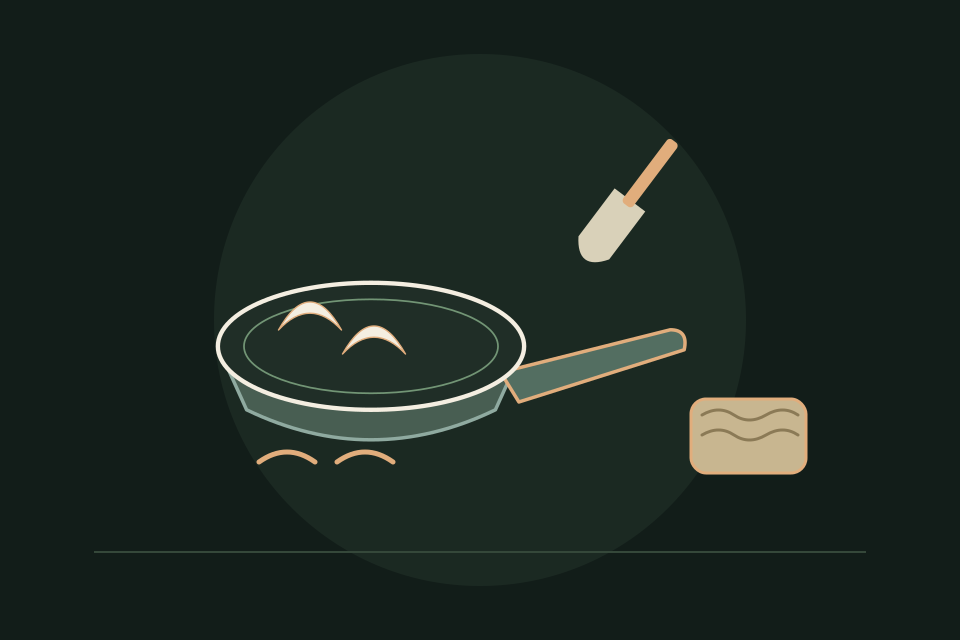
For a PTFE coating, the dedicated page explains why to avoid heating an empty pan. To soften an onion, prepare the ingredients first and watch the pan afterwards. An extra notch of power is no substitute for attention.
Clean without trying to rebuild a coating
Let the pan cool as instructed, then use a compatible cleaning tool. Do not loosen food with a knife. If a coating peels or flakes, remove the pan from food use pending replacement; scrubbing harder will not recreate the missing layer.
Sources for this page
- Santé Canada : Utilisation sûre des ustensiles de cuisson , Accessed October 22, 2026
- Singapore Food Agency : Safe Practices for Non-Stick Pans , Accessed October 22, 2026