Materials
Enamelled cast iron: identify and protect the surface
With enamelled cast iron, distinguish enamel from seasoning, heat according to the instructions and protect the inner surface during cooking and cleaning.
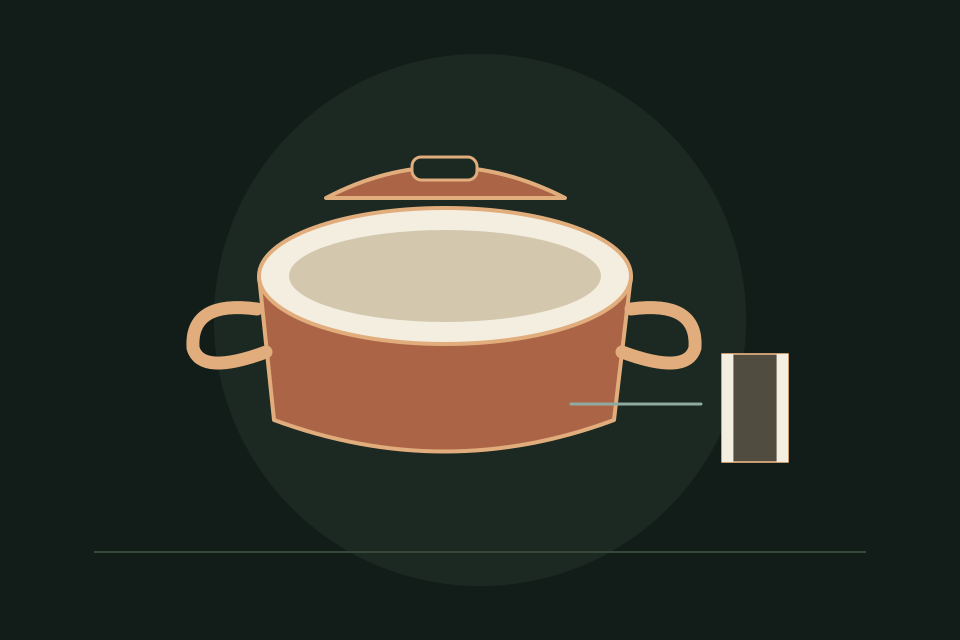
In enamelled cast iron, an enamel layer separates the iron from the food. Care for it as an enamelled surface, without applying restoration methods for bare seasoned cast iron. Even a black interior deserves that check: the colour is not an instruction manual.
Do not confuse enamel with seasoning
Enamel is a glass-like coating; seasoning forms from heated oil on bare cast iron. Do not strip an enamelled interior to follow a method intended for bare iron.
Lodge explains that prolonged contact with acidic foods can affect seasoning on bare cast iron and suggests enamel for long acidic cooking. Before making tomato sauce, still check the intended use of your model.
Bring up the heat gradually
Cast iron holds heat: starting too hot makes it harder to adjust later. Le Creuset’s enamelled cast-iron instructions recommend heating gradually over low to medium heat. Dry-heating instructions differ between grills and other cookware, so follow those for your model.
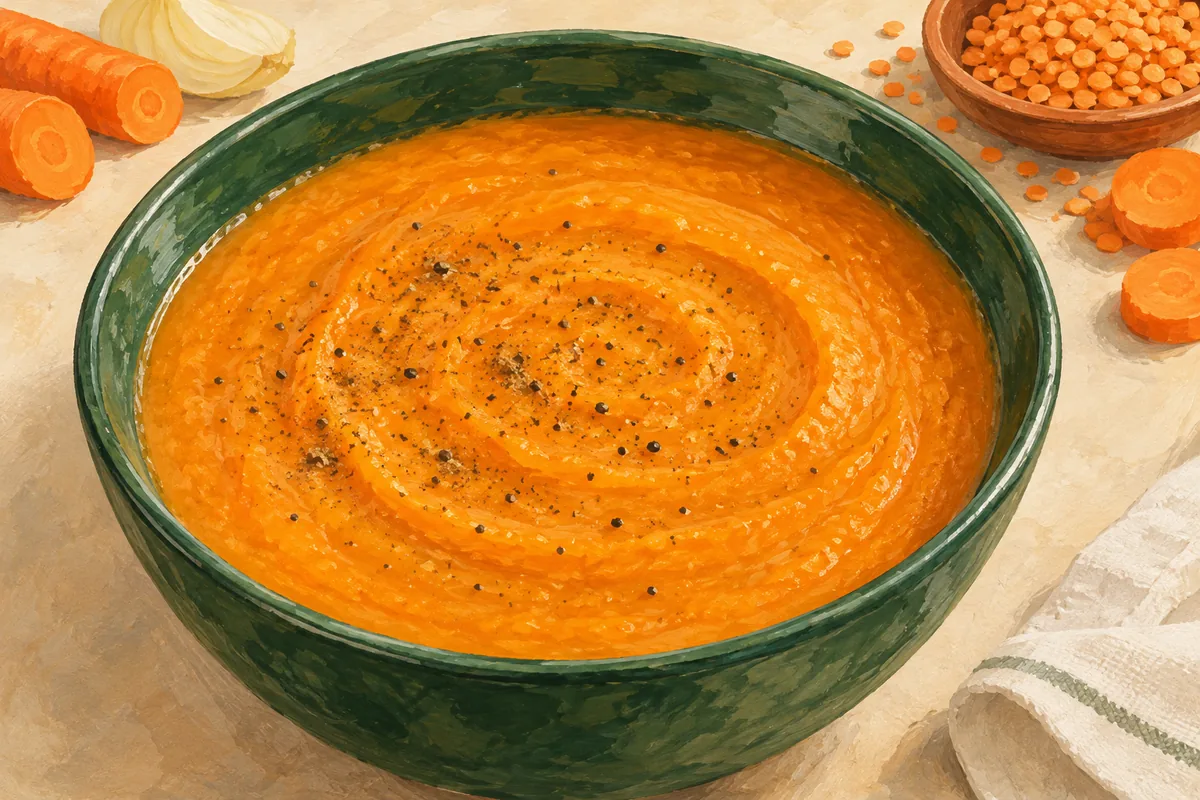
For carrot and red lentil soup, choose a saucepan that holds the volume and is easy to handle. Prepare the vegetables and liquid before heating. Check that the pan and its handles are oven-compatible; use suitable protection when moving it hot.
Treat enamel gently during cleaning
Avoid knocks, sharp tools inside the pan and sudden changes from heat to cold water. Let it cool, then remove residue with approved utensils. If the interior chips, stop using it and ask the manufacturer whether it needs replacing.
Sources for this page
- Le Creuset Canada : Utilisation et entretien de la fonte émaillée , Accessed October 22, 2026
- Lodge : Acidité et fonte culottée , Accessed October 22, 2026
- Santé Canada : Fonte et émail , Accessed October 22, 2026