Materials
Stainless steel: understand the pan before use
Understand stainless steel cookware: the food-contact surface, base construction, hob compatibility and maintenance need checking for each utensil.
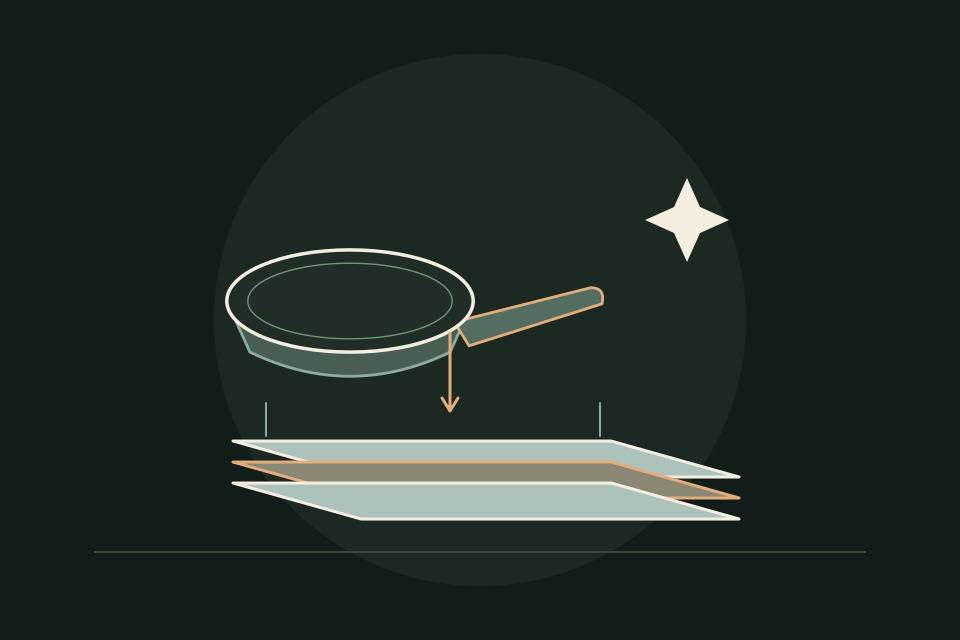
Stainless steel resists corrosion, but the name does not describe the whole frying pan or saucepan. Several metals may go into it. Identify the food-contact surface, then check the model’s hob, heating and oven requirements.
Separate the cooking surface from the construction
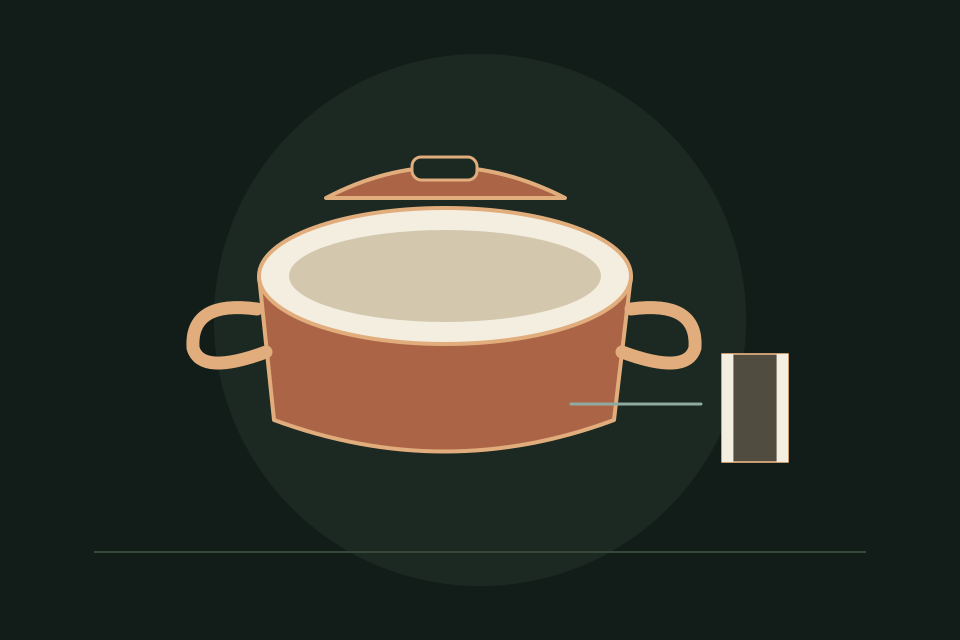
Le Creuset describes, for example, an aluminium core between stainless-steel layers. The word “stainless” alone does not tell you this: check the base construction and heat distribution of your chosen pan.
Food contact, hob compatibility and oven use are three separate checks. The DGCCRF factsheet on uncoated stainless steel concerns food contact, not cooking performance.
Set the heat for the dish
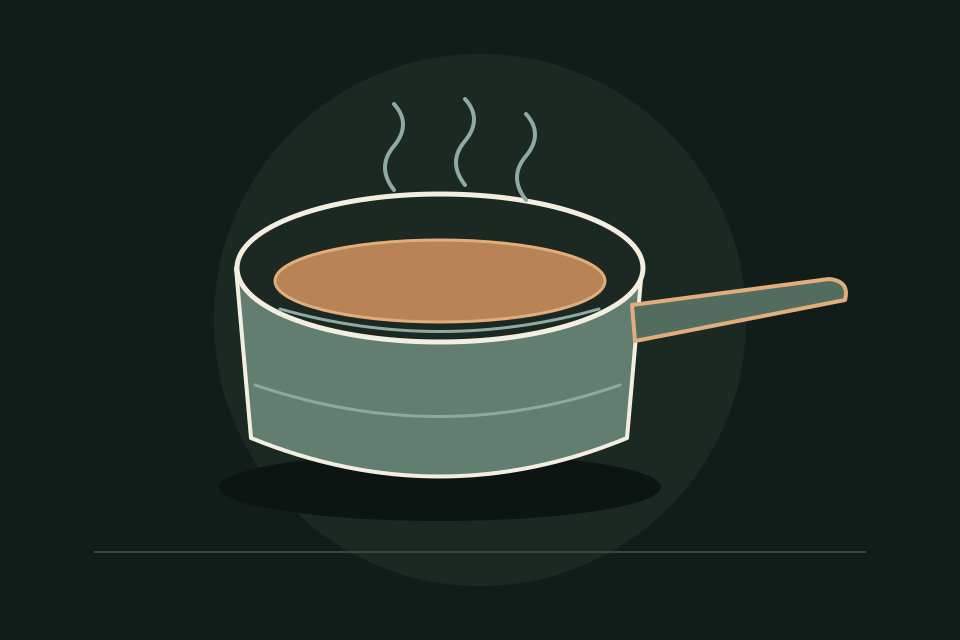
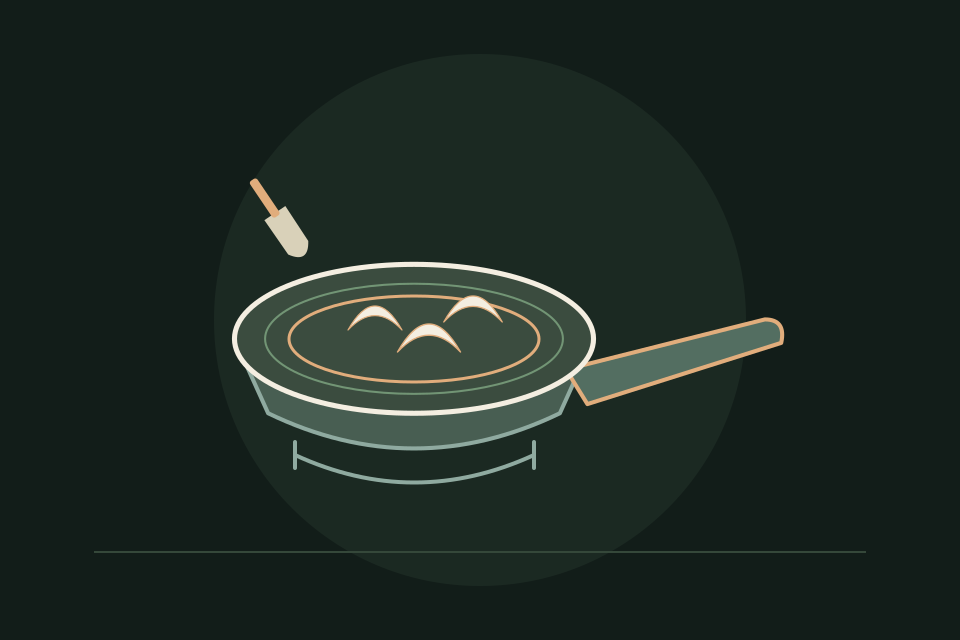
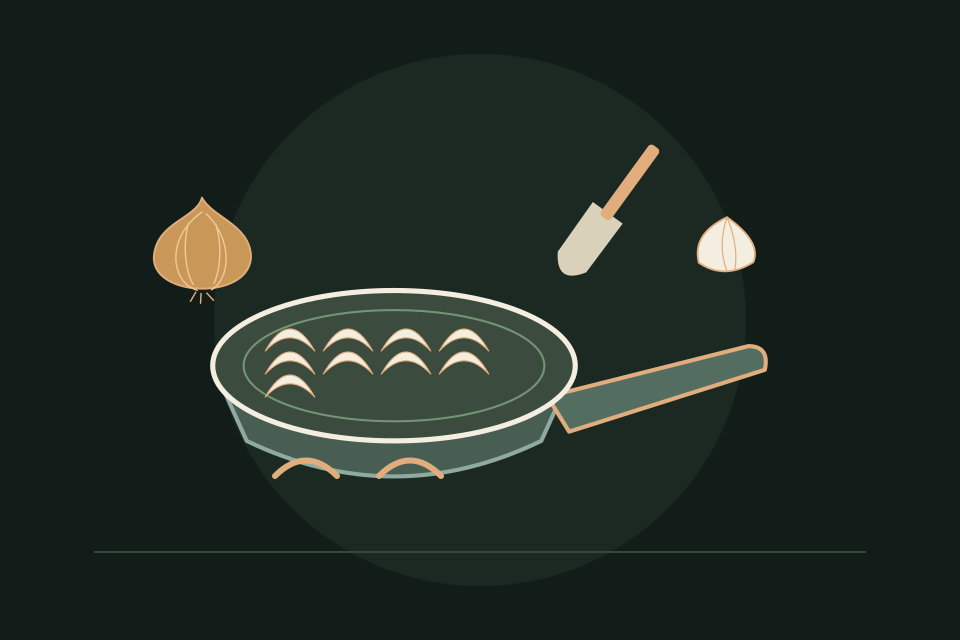
For soup, lower the heat once the liquid simmers. For onions, follow Softening without burning. A searing demonstration in one pan does not establish that every model can be preheated empty.
For a nickel allergy, Health Canada advises avoiding cookware that contains nickel. Do not judge composition by appearance: ask the manufacturer for specifications and seek appropriate medical advice if needed.
Follow the instructions for stuck-on food
For its stainless-steel range, Le Creuset says to let the pan cool before washing and not to plunge a hot pan into cold water. Warm water can help loosen residue. Follow your model’s instructions for cleaners and dishwasher use.
Sources for this page
- DGCCRF : Aciers inoxydables non revêtus, fiche n° 1 , Accessed October 22, 2026
- Le Creuset Canada : Notice de la gamme inox , Accessed October 22, 2026
- Santé Canada : Acier inoxydable et fonte , Accessed October 22, 2026